Ashirwad Yog-Naturopathy College
How to Become a Certified Yoga Teacher in India?
Have you ever felt a profound shift in your soul during a sunset Savasana and wondered if you were meant for more than just practicing on the mat? The transition from a dedicated practitioner to an inspiring guide is a sacred evolution. India is the undisputed cradle of this ancient wisdom, offering an energy you simply cannot find elsewhere. If you are ready to turn your passion into a profession, learning how to become a certified yoga teacher in India is your first step toward a life of purpose and global impact.
The Journey to Professional Yoga Certification
To become a certified yoga teacher in India is to return to the source. While yoga is a spiritual discipline, the modern professional landscape requires a structured educational foundation. In India, this usually involves enrolling in a Yoga Teacher Training (YTT) program that is registered with international or national bodies.
The most recognized standard is provided by Yoga Alliance, which designates Registered Yoga Schools (RYS). Most aspiring teachers begin with a 200-hour certification, which covers the fundamentals of asana, anatomy, and philosophy. This foundational step ensures you aren’t just performing physical exercises, but are capable of transmitting a 5,000-year-old lineage with safety and authenticity.
Beyond the certificates, the Indian experience offers a unique immersion. You aren’t just studying a syllabus; you are living the “Yogic Lifestyle” in the very geography where it was conceived. This environment fosters a deeper understanding of the “Eight Limbs of Yoga,” moving your practice far beyond the physical postures.
Why India is the Global Hub for Yoga Careers
The global wellness industry is currently valued at trillions of dollars, and yoga remains one of its fastest-growing sectors. However, the market is becoming increasingly discerning. Practitioners are no longer looking for “fitness instructors”; they are seeking authentic teachers who understand the roots of the craft.
Choosing to become a certified yoga teacher in India gives you an immediate edge in the competitive wellness market. Whether you aim to open a studio in Nagpur, teach online, or lead retreats in Europe, an Indian certification carries a weight of “traditional authority” that is highly respected worldwide.
- Growing Global Demand: Increasing awareness of mental health and lifestyle diseases is driving the need for qualified holistic experts.
- Authenticity Advantage: Employers and students prioritize teachers trained in traditional settings like Rishikesh, Mysore, or Kerala.
- Comprehensive Skillset: Indian courses blend modern physiotherapy insights with ancient Ayurvedic principles.
- Diverse Career Paths: Certification opens doors to corporate wellness, clinical yoga therapy, and luxury hospitality roles.
- Networking: You will study alongside a global community, building a professional network that spans every continent.
As the industry continues to professionalize, having a formal credential is no longer optional—it is the bedrock of your credibility. This professional grounding allows you to step into the classroom with the confidence of a true subject matter expert.
Understanding the Curriculum and Core Value
When you commit to a training program in India, you are signing up for a transformative academic and spiritual “deep dive.” A standard RYT 200 (Registered Yoga Teacher) course is designed to rebuild your understanding of the human body and mind from the ground up.
The Pillars of Yoga Education
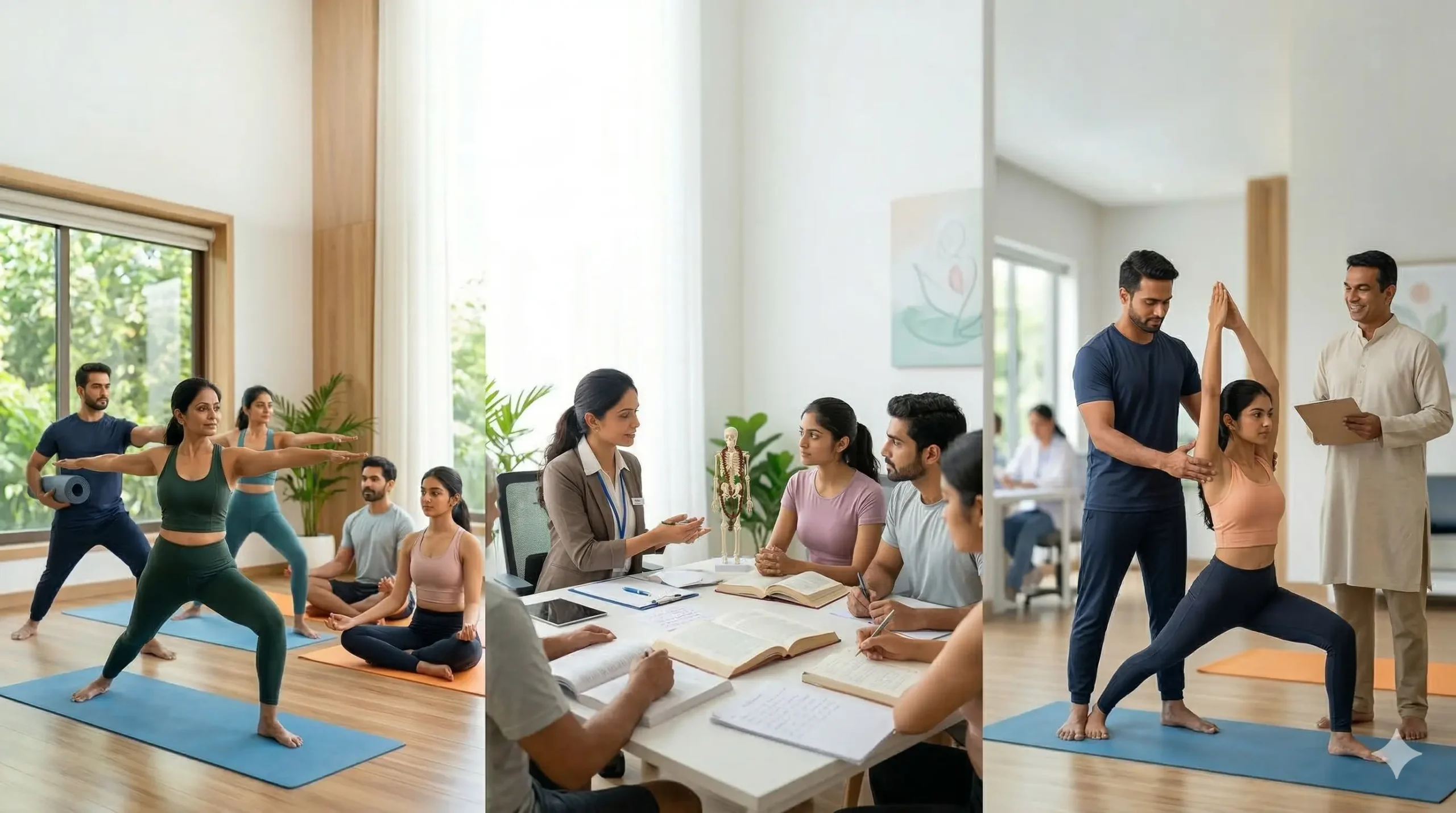
The curriculum is typically divided into five key modules. First is Technique and Training, where you break down the alignment and benefits of dozens of asanas. Second is Teaching Methodology, which focuses on the “art of the cue”—learning how to use your voice and presence to lead a room safely.
Third is Anatomy and Physiology, ensuring you understand how yoga affects the nervous system, respiratory function, and musculoskeletal structure. Fourth is Yoga Philosophy, involving the study of the Yoga Sutras of Patanjali and the Bhagavad Gita. Finally, Practicum hours allow you to practice teaching under the watchful eye of a master guru, receiving real-time feedback.
The Unique Value of Gurukul-style Learning
What sets Indian certification apart is the focus on Sadhana (disciplined practice). You aren’t just learning “how to teach”; you are learning “how to be.” Most Indian schools incorporate Naturopathy and Ayurveda into their curriculum, teaching you how diet, cleansing techniques (Shatkarmas), and meditation work together to create total health.
This holistic approach ensures that when you graduate, you aren’t just reciting instructions from a manual. You are sharing a lived experience of vitality and peace. This depth of knowledge is exactly what prepares you for the diverse needs of modern students, from those recovering from injury to those seeking spiritual solace.
Who Is This Path Designed For?
You don’t need to be able to put your feet behind your head to start this journey. The path to become a certified yoga teacher in India is open to anyone with a sincere heart and a disciplined mind. While physical fitness is a natural byproduct, the real requirement is a thirst for knowledge and a desire to serve others.
You might be the perfect fit if:
- You have a consistent personal practice and feel a calling to share its benefits.
- You are a healthcare professional (like a physiotherapist) looking to add holistic tools to your practice.
- You are seeking a career change that aligns with your values of health and mindfulness.
- You want to deepen your own spiritual journey through formal, structured study.
- You are a fitness enthusiast who wants to master the science of breath and alignment.
If you find yourself constantly explaining yoga concepts to friends or feeling more “at home” in a studio than an office, the universe is likely nudging you toward this transition. Once you identify your “why,” the “how” becomes a rewarding adventure of self-discovery.
Transformation: What to Expect After Certification
The results of completing a certification in India are both professional and deeply personal. Professionally, you will emerge with a globally recognized credential that allows you to register as an RYT (Registered Yoga Teacher). This is your “passport” to the international yoga community, enabling you to teach at studios, resorts, and gyms worldwide.
Personally, you can expect a total shift in your perspective. Most graduates report increased emotional resilience, improved physical vitality, and a newfound sense of clarity regarding their life’s purpose. You won’t just have a certificate; you will have the pedagogical skills to design sequences that change lives and the philosophical grounding to remain centered in a chaotic world.
The transformation is measurable. You will go from feeling like a student who “follows” to a leader who “guides.” This shift in confidence is the most valuable outcome of all, as it empowers you to build a sustainable, heart-centered business that supports both your lifestyle and your soul.
Taking the First Step Toward Your New Life
Becoming a certified yoga teacher is more than just a career move; it is a commitment to a lifelong journey of health and wisdom. By choosing to become a certified yoga teacher in India, you are honoring the roots of the practice while equipping yourself with the modern tools necessary to succeed in the 21st-century wellness landscape.
The world is waiting for authentic voices to lead the way back to balance. Whether your dream is to teach in a local community center or lead international retreats, your journey starts with the right education and a recognized certification.
Are you ready to step onto the path of the teacher? Explore our comprehensive guide to the best Yoga Teacher Training programs in India and find the school that resonates with your spirit. Your transformation begins the moment you decide to say “yes” to your calling.